
Family Martial Arts or Team Sports: Which Fits?
- brocksensei
- 5 days ago
- 6 min read
The question of family martial arts or team sports often arrives at a busy moment: a child needs an activity, a parent wants a healthy outlet, and everyone hopes the choice will build more than a packed schedule. Both paths can strengthen bodies and create friendships. The better choice depends on what your child needs most right now, how your family functions, and the kind of growth you want to support over time.
A child who thrives on shared goals, fast action, and game-day energy may find a home on a team. A child who needs focus, confidence, steady mentorship, and a clear path of personal progress may grow deeply through traditional karate. Neither choice has to be permanent, and neither is automatically better. The goal is to choose with purpose.
Family Martial Arts or Team Sports: Start With the Child
Parents sometimes begin with the question, “Which activity is most popular?” A more useful question is, “What will help my child become stronger in character?” That answer may look different for every child in the same household.
Team sports can teach cooperation in a very visible way. Players learn to communicate, accept a role, practice for a common outcome, and recover from wins and losses together. For children who enjoy constant movement and feel energized by a group goal, that environment can be powerful.
Traditional martial arts offer a different kind of structure. Students train alongside others, but their progress is personal. They learn that effort, attention, repetition, and self-control shape results. A student does not need to be the fastest, loudest, or most naturally athletic person in the room to move forward. They need to show up, listen, practice, and keep going.
That distinction matters for children who are still finding their voice. Karate gives them a place to be part of a group without disappearing inside it. They bow with classmates, encourage one another, and learn shared standards, while still taking responsibility for their own stance, technique, attitude, and improvement.
What Each Path Teaches Well
Team sports and martial arts overlap in valuable ways. Both can improve coordination, conditioning, resilience, and social confidence. Both ask children to follow instruction, handle setbacks, and commit to practice. The difference is often in how those lessons are delivered.
In a team sport, the schedule and priorities naturally center on the team. Practice prepares players for a game, a season, or a tournament. Individual success is connected to the group’s performance. That shared pressure can teach sacrifice and perseverance, but it can also be difficult for a child who fears letting others down or receives limited time to develop skills.
In karate, the standard is not whether one student outperforms another. The standard is whether the student is improving with honesty and discipline. Students work on balance, strength, flexibility, awareness, and technique, but they also practice respect, patience, and composure. A difficult drill becomes an opportunity to face frustration without quitting. A correction becomes instruction, not a personal failure.
This is why martial arts can be especially meaningful for a child who needs more confidence but does not respond well to being pushed into the spotlight. Progress is visible, yet it is earned at a personal pace. A new skill, a stronger stance, or a belt earned through consistent effort can become proof that hard work changes what a child believes they can do.
Competition Is Not the Only Measure of Growth
Competition can be healthy. It teaches children to prepare, take risks, and remain gracious whether the outcome goes their way or not. Team sports provide these lessons often and directly.
Still, families should not assume that a child must compete to develop grit. In a traditional dojo, students meet a demanding opponent every class: the version of themselves that wants to rush, give up, lose focus, or avoid a challenge. Learning to manage that inner resistance is a lifelong skill.
A student can train toward competition if that path serves their goals, but a meaningful martial arts journey does not depend on trophies. The deeper reward is becoming more disciplined, capable, and respectful in everyday life.
The Family Factor: Schedules, Support, and Belonging
When considering family martial arts or team sports, look beyond the child’s first week of excitement. Consider the rhythm of your household. Some sports have a concentrated season with frequent games, travel, and shifting practice schedules. Many families enjoy that pace. Others find that it strains dinner routines, schoolwork, rest, and time together.
Martial arts training is usually built around consistent classes and long-term development. That consistency can make it easier for children to form habits. They know where they are going, what is expected, and how they are growing from one class to the next.
For families with more than one age group, a family-centered dojo can offer something especially valuable: a shared culture of effort and respect. Younger children see teens and adults practicing with purpose. Parents can better understand what their children are learning because the values are visible in the room. In some cases, family members can train themselves, turning encouragement from the sidelines into a shared journey.
That does not mean every family needs to train together. A child may need karate to be their own space, separate from siblings and parents. But it does mean the dojo can become a supportive community where families are known, students are guided, and progress is noticed.
Signs Martial Arts May Be the Right Next Step
Martial arts is not only for children who already seem focused and confident. It is often most helpful for children who are developing those qualities. Consider traditional karate if your child needs a constructive outlet for extra energy, has trouble staying focused, becomes discouraged easily, or would benefit from clearer routines and boundaries.
It can also be a wise choice for the child who does not enjoy the pressure of being selected, benched, or compared with teammates. In a well-led class, every student has work to do. The quiet beginner and the experienced teen both have a place, responsibility, and next step.
For parents, pay attention to the teaching environment as much as the activity itself. Is instruction structured without being harsh? Are students expected to show respect, but also treated with patience? Are corrections specific and encouraging? Does the school care about character when nobody is watching? Those questions reveal whether a program can support growth beyond fitness.
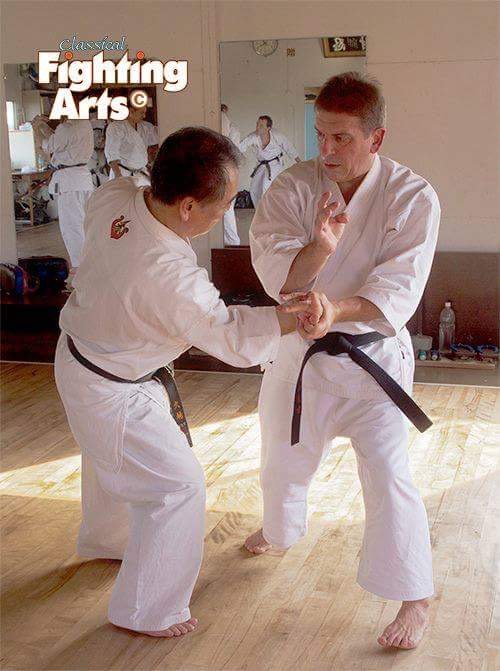
At Ten Chi Jin Dojo, traditional Okinawan karate is taught as a path of self-mastery, not a quick activity to check off the calendar. Students are challenged to overcome physical, mental, and spiritual obstacles while learning to carry respect and responsibility into home, school, and work.
When Team Sports May Be the Better Choice
Team sports may be the stronger fit when a child is eager for the shared identity of a roster and genuinely enjoys the strategy of a game. Some children learn best when every practice leads toward a clear group event. They may love the communication, pace, and collective celebration that comes with a season.
A child can also benefit from both experiences, provided the schedule leaves room for rest and family life. Martial arts can give a young athlete individual discipline, mobility, and mental focus, while a team sport fulfills their desire for group competition. The deciding factor is not how many activities a child can manage. It is whether they have enough time and energy to be present in each one.
Avoid choosing an activity only because friends have signed up or because it seems like the expected next step. Children grow at different rates. The right environment is the one that calls them higher while still making them feel safe enough to try.
Choose a Path That Builds Better People
The best extracurricular activity is not necessarily the one that produces the busiest calendar or the most exciting photo. It is the one that helps your child become more capable when life gets hard.
Whether your family chooses a team, a dojo, or a thoughtful combination of both, look for mentors who teach more than performance. Look for a place where effort is recognized, standards are clear, and children learn that respect is something they practice every day. Give your child a path that asks them to grow - then stand beside them as they take the next step.

Comments