
Can Families Train Karate Together?
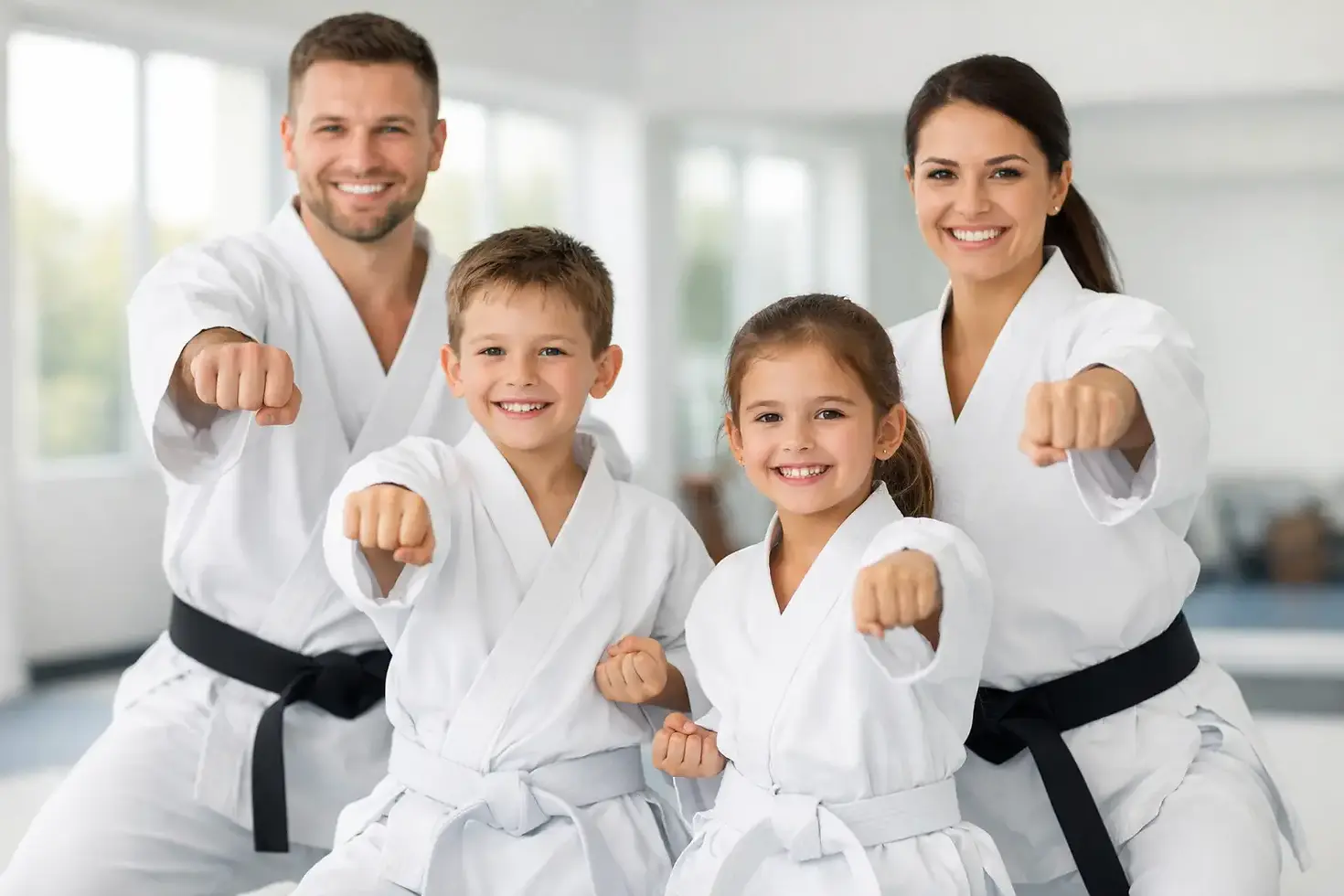
A parent helps tie a white belt. A younger child watches an older sibling bow onto the floor with focus. An adult who meant to sit on the sidelines ends up learning right alongside them. If you have ever wondered, can families train karate together, the answer is yes - and in the right dojo, it can become one of the strongest routines a family builds.
Karate is often seen as something divided by age group: kids here, adults there, everyone progressing on separate tracks. That structure has value, and good schools do organize training by age and stage. But family training is not only possible. It can be deeply effective when the instruction is thoughtful, the expectations are clear, and each person is allowed to grow at the right pace.
Can families train karate together in a traditional dojo?
Yes, but the healthiest version of family training is not about forcing everyone into the exact same experience. In a traditional dojo, training is shared through values, discipline, and consistent practice, even when class formats differ by age or rank.
That distinction matters. A six-year-old, a teenager, and a parent do not learn in the same way. Children need structure that matches their attention span and physical development. Teens often need challenge, responsibility, and confidence. Adults may come in looking for fitness, stress relief, flexibility, or a fresh sense of purpose. A strong family-centered karate school understands those differences while still giving the household a common path.
In other words, family karate works best when everyone is connected by the same principles - respect, effort, patience, self-control - even if their class experience is tailored to where they are.
Why family karate works so well
Many extracurricular activities split the family apart. One child has practice on one side of town, another has games on the weekend, and parents spend most of their time coordinating rather than participating. Karate can change that dynamic. Instead of being only transportation and spectators, parents and siblings can become training partners in a shared journey.
That shared journey creates a different kind of accountability. Children tend to stay more engaged when they see a parent living the same standards they are asked to follow. Bowing in with respect, listening carefully, practicing basics, and working through frustration become family habits instead of lecture topics. Kids notice that immediately.
There is also something powerful about mutual humility. In karate, everyone starts somewhere. A parent may be accomplished at work and still need to learn how to move correctly in a front stance. A child may progress quickly in one skill and struggle in another. A teen may discover that real confidence comes from consistency, not showing off. Training together puts everyone in contact with the same truth: growth is earned.
That lesson carries beyond class. Families often find that communication improves when they share a disciplined activity built on respect. Not perfect communication, because no family is perfect, but clearer communication. Instructions matter. Tone matters. Follow-through matters. Karate reinforces those things week after week.
What family training actually looks like
When people ask if families can train karate together, they sometimes imagine every member standing in a single line doing the same drill at the same time. That can happen in some settings, but it is not the only model, and it is not always the best one.
Often, family training means a combination of separate and shared experiences. Younger children may attend age-appropriate classes that focus on coordination, listening, and foundational movement. Teens and adults may train in classes with more complex technical demands and higher physical intensity. The connection comes from being part of the same dojo culture, learning the same standards of conduct, and practicing together at home.
Some families also attend special sessions, events, or overlapping classes that allow them to train in the same environment. In those moments, the dojo becomes more than a place to work out. It becomes a place where the family develops a common language around perseverance and self-control.
That balance matters because good karate instruction protects long-term development. If classes are made too broad just to keep everyone in one room, quality can suffer. If programs are too isolated, the family benefit gets weaker. The best approach is structured flexibility.
The benefits for children, teens, and parents
For children, family karate can create emotional security. Walking into a new environment feels less intimidating when a sibling or parent shares the journey. It also reinforces consistency at home. Respect, posture, listening, and follow-through are easier to practice when the whole household understands what those words mean in action.
For teens, training with family can be grounding. Adolescence is a season where young people test limits, search for identity, and respond strongly to authentic leadership. Karate gives them challenge and responsibility. Seeing parents choose discipline for themselves can make that message more credible.
For adults, the benefits are often underestimated. Many parents sign their children up for activities and quietly set aside their own growth. Karate offers a way back into intentional development. It builds physical strength and mobility, but it also sharpens focus and steadies the mind. Adults who train are not just supporting their children from the outside. They are modeling what it means to keep learning.
As a family unit, the benefit is rhythm. Shared training creates routines that are healthier than passive entertainment and stronger than occasional motivation. Families do not need another activity that fills the calendar without shaping character. They need practices that help build better people.
When family karate is not as simple as it sounds
There are real trade-offs, and it helps to be honest about them.
Not every family member will love karate for the same reason. One child may enjoy kata, another may prefer partner drills, and a parent may be drawn to the mindset and tradition more than the physical challenge. That is normal. Shared training does not mean identical enthusiasm on day one.
Progress can also feel uneven. One family member may advance quickly while another needs more time. If the home atmosphere becomes overly competitive, the value of training starts to erode. Karate should build one another up, not turn every class into a comparison.
Scheduling can be another challenge. Age-based classes exist for a reason, and family life is busy. The goal is not perfect alignment every week. The goal is commitment over time. A well-run dojo helps families find a realistic path instead of creating pressure they cannot sustain.
And then there is the parent role. If you train with your child, you still need to let the instructor lead. That can be difficult for loving, involved parents. But it is essential. The dojo works best when children understand that class is a place of respectful learning, not a space where family dynamics take over.
How to know if a dojo is right for your family
If you are considering family karate, look beyond whether a school simply allows multiple ages to enroll. Ask whether it has the structure to teach each person well.
A strong dojo will have clear standards, age-appropriate instruction, and a culture where beginners are guided with patience and discipline. It will treat karate as more than entertainment. It will expect effort, respect, and consistency while still welcoming families warmly.
You should also pay attention to the deeper mission. Does the school focus only on keeping students busy, or does it intentionally develop character? Is the atmosphere chaotic, or is it calm and purposeful? Are students learning self-control along with technique? Those things matter, especially for parents who want more than an after-school activity.
In a traditional setting rooted in authentic instruction, karate becomes a framework for growth. That is where family training becomes especially meaningful. Everyone is not just learning to punch and block. They are learning how to carry themselves with more discipline in everyday life.
Can families train karate together and still progress individually?
Absolutely. In fact, that is often the healthiest outcome.
Shared training gives the family a common foundation, but individual progress gives each person ownership. A child learns confidence through small wins. A teen learns responsibility through steady effort. A parent learns that improvement is still possible at any stage of life. The family moves in the same direction without losing personal purpose.
That is one reason family karate can be so lasting. It respects both togetherness and individuality. You are not trying to turn everyone into the same student. You are building a household culture where discipline, humility, and courage are practiced side by side.
At Ten Chi Jin Dojo, that kind of training aligns naturally with a family-centered martial arts culture grounded in traditional Okinawan karate. For many households, the question is not whether family training is possible. It is whether they are ready to choose a path that asks something meaningful of everyone.
If your family wants an activity that teaches more than motion, karate may be worth stepping into together. The belts come later. First comes the decision to grow in the same direction.

Comments