
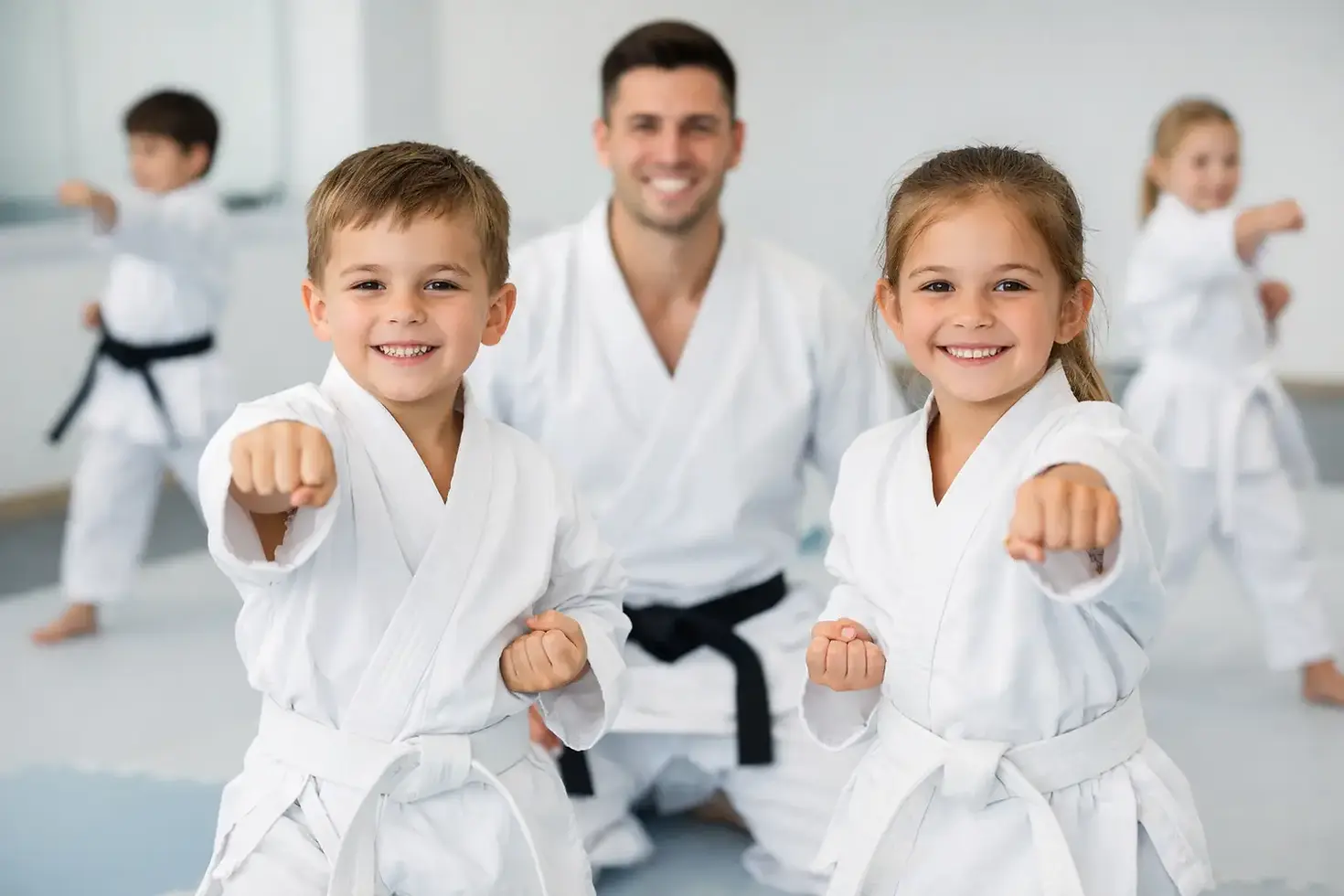
What Age Should Kids Start Karate?
Some children are ready for karate at four. Others are better served by waiting until six, seven, or even later. When parents ask what age should kids start karate, the most honest answer is not a single number. It is a combination of maturity, attention span, emotional readiness, and the kind of instruction they are stepping into.
That matters because karate is not babysitting and it is not random activity. In a traditional dojo, children are learning how to listen, how to move with control, how to respect structure, and how to keep going when something is difficult. Age plays a role, but readiness matters more.
What age should kids start karate in a traditional dojo?
Most children can begin some form of karate instruction between ages four and six. That is often the window when they can start following simple directions, taking turns, and participating in a group setting without needing constant one-on-one support.
Still, there is a real difference between being physically active and being ready for martial arts training. A four-year-old may love kicking and punching pads, but if that child cannot stay with the class, respond to coaching, or regulate emotions after a correction, the experience may feel frustrating for everyone involved.
By age six or seven, many children are more prepared for the rhythm of class. They can usually focus longer, remember patterns more easily, and understand that discipline is part of the process. This does not mean younger children should not start. It simply means the best starting age depends on what the child can handle well right now.
The better question is whether your child is ready
Parents often look for an age benchmark because it feels clear. But a birthday does not suddenly create confidence, patience, or self-control. Those qualities develop over time, and karate can help build them, but a child needs enough readiness to participate in the building process.
A good starter class asks a child to line up, listen, watch, repeat, and adjust. That sounds simple, but for young kids it is a lot. If your child can separate from you without distress, follow two-step directions, wait for a turn, and recover after small corrections, those are strong signs karate may be a good fit.
If your child is bright and energetic but struggles in group environments, that does not automatically mean no. It may mean the class setting needs to be supportive, structured, and age-appropriate. The right instructor can make a major difference.
Signs a child is ready to start
Readiness usually shows up in everyday behavior before it shows up in the dojo. A child who can participate in preschool, team activities, church classes, or other structured settings often has a foundation for karate.
You may also notice that your child enjoys practicing skills, not just playing games. Karate includes fun, especially for young students, but it also involves repetition. Children who can try again after making a mistake tend to do especially well.
Signs it may be better to wait a little
If a child melts down whenever things do not go their way, cannot stay with a group for even a short period, or becomes unsafe when excited, a short wait may help. That is not failure. It is good timing.
Sometimes a parent wants karate to fix behavior instantly. Karate can absolutely support better behavior over time, but the child still needs a basic level of participation to benefit from training. Starting too early can create discouragement instead of momentum.
What kids gain from starting young
When the timing is right, young children can gain a great deal from karate. They begin learning body control, balance, coordination, and spatial awareness. Just as important, they are introduced to habits that carry into school and home life: standing still when asked, listening fully, and responding with respect.
For many families, the biggest benefit is not athletic performance. It is growth in confidence and self-control. A child who learns to bow, follow instruction, and complete a task with effort is not just learning martial arts. That child is building character.
Starting young also allows skills to grow steadily over time. Instead of rushing, the child matures inside the discipline. Technique improves, but so do patience and resilience. In a healthy dojo culture, progress is measured by who the student is becoming, not just what kick they can throw.
Why older can sometimes be better
There is a common assumption that earlier is always better. Not always. Some children thrive when they begin at eight, ten, or twelve because they can understand instruction more deeply and commit more seriously.
Older beginners often pick up form, etiquette, and technical detail faster than very young students. They may also appreciate the deeper purpose of training - not just movement, but responsibility, perseverance, and self-mastery.
So if your child did not start at four or five, there is no missed window. Karate is not only for children who begin early. In many cases, a later start leads to stronger long-term engagement because the student chooses the path with more awareness.
Choosing the right class matters as much as age
A child can be the right age and still be in the wrong environment. This is where parents need to look beyond the schedule and ask what kind of training culture the dojo provides.
A strong youth karate program should have clear expectations, age-appropriate instruction, and a balance of encouragement and accountability. Young children need structure, but they also need teachers who understand child development. They should be challenged without being overwhelmed.
In a traditional school, children are not just kept busy. They are guided. That difference matters. Real karate instruction teaches them how to carry themselves, how to respond under pressure, and how to respect both their instructors and fellow students.
For families around Dalton, Varnell, and nearby North Georgia communities, that often means looking for a dojo that sees martial arts as character development, not just activity. The best programs help children grow as people while they grow as students.
What age should kids start karate if they are shy, energetic, or struggling with focus?
This is where the answer becomes more personal.
A shy child may benefit from starting sooner if the environment is welcoming and steady. Karate gives that child a script for success. There is a place to stand, a way to respond, and a structure to follow. Over time, that can build quiet confidence.
A highly energetic child may also do very well, but only if the class channels that energy instead of feeding chaos. Good instruction teaches control, not just output. The goal is not to tire the child out. The goal is to help the child direct effort with purpose.
For children who struggle with focus, karate can be helpful, but expectations need to be realistic. Progress may come in small steps. First they learn to stand in line. Then to watch. Then to complete part of a drill without drifting. Those are meaningful victories. In the right setting, small wins become strong habits.
How parents can make the start successful
A child’s experience in karate is shaped partly by what happens before and after class. Parents help most when they frame karate as a place for growth, not a place for instant perfection.
That means praising effort, consistency, and respect. It also means letting instructors coach. Children do best when expectations are clear and adults are working in the same direction.
It helps to prepare your child with simple language. Tell them they will listen, try their best, and show respect. If they are nervous, that is normal. New things feel big before they become familiar.
And if the first class is not perfect, that is normal too. Many children need a few visits to settle in. The real question is whether the dojo can guide them patiently while still maintaining standards.
So, when should your child begin?
If your child is around four to six and can handle a structured group class, that may be a strong time to begin. If your child is older and ready for a meaningful challenge, that can be an excellent time too. There is no magic age that guarantees success.
The right start happens when a child is ready to learn in a disciplined, supportive environment and when the dojo is equipped to teach more than techniques. At Ten Chi Jin Dojo, that belief is simple: training should build better people.
Choose the time that gives your child the best chance to grow with confidence, humility, and strength. Karate is not a race to start early. It is a journey worth starting well.

Comments