

8 Best Karate Drills for Home Practice
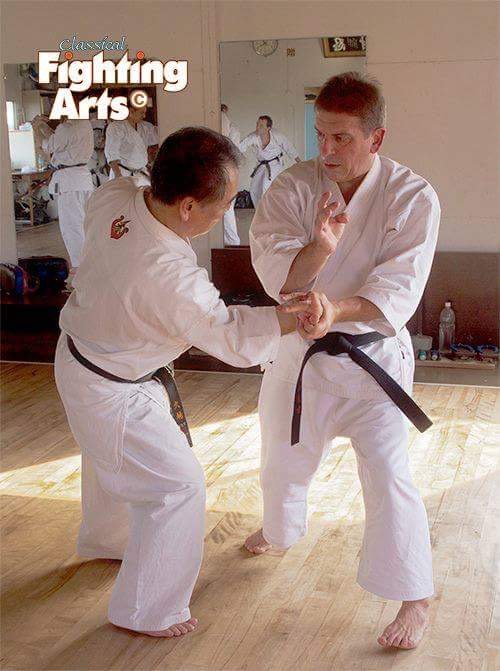
Some of the best karate drills for home practice are not the flashiest ones. They are the movements that sharpen posture when no one is watching, build focus when motivation feels thin, and teach students to respect the basics enough to repeat them well. That is where real progress begins.
Home training should support dojo training, not replace it. A good drill at home helps a child build confidence, helps a teen stay consistent, and helps an adult keep moving forward even on a busy week. The goal is not to do more for the sake of doing more. The goal is to practice with purpose.
What makes the best karate drills for home practice
A strong home drill does three things. It reinforces correct mechanics, it can be practiced safely in limited space, and it develops habits that carry back into class. That last point matters. A home routine should make a student more attentive, more coordinated, and more disciplined when they return to formal instruction.
It also helps to choose drills that match the student’s level. Beginners need simple repetition and clear positions. More experienced students can handle tempo changes, transitions, and higher demands on control. If a drill causes rushed technique or sloppy posture, it is probably too advanced or being done too fast.
Start with stance holds and stance transitions
Traditional karate begins from the ground up. If the feet are unstable, everything above them suffers. That is why stance work remains one of the most valuable things a student can do at home.
Begin by holding a basic stance with intention. Keep the spine tall, knees engaged, and weight settled. Breathe steadily and avoid leaning or collapsing through the hips. Even thirty seconds of focused stillness can reveal weakness, tension, or imbalance that needs attention.
Then practice transitioning from one stance to another. Move slowly at first. The point is not speed. The point is learning how to stay rooted while shifting the body with control. For children, this builds body awareness. For teens and adults, it often exposes where mobility and strength need work.
Practice chamber and slow front kicks
Kicking drills at home should prioritize control over height. A student who can lift the knee cleanly, hold the chamber, and extend the kick without losing posture is building useful skill. A student who throws the leg high with no balance is only rehearsing bad habits.
Start by raising the knee to chamber and holding it for a few seconds on each side. Keep the supporting foot grounded and the torso upright. From there, extend a slow front kick and return to chamber before setting the foot down. That return phase is where many students lose discipline, but it is just as important as the kick itself.
This drill develops balance, hip strength, and patience. It is especially helpful for younger students who need coordination, but adults benefit from it just as much. If balance is a challenge, use a wall lightly for support rather than forcing a poor position.
Use basic punch drills to train alignment
A straight punch looks simple until you try to repeat it correctly fifty times. That is why it belongs in any serious home routine. Basic punching drills teach alignment through the wrist, elbow, shoulder, and hips while also reinforcing breathing and timing.
Stand in a stable stance and throw single punches with deliberate form. Focus on the path from chamber to extension and back again. Shoulders should stay relaxed. The fist should arrive with structure, not tension. Power comes from coordinated movement, not from tightening everything at once.
Once that feels consistent, add alternating punches in rhythm. Keep the pace steady enough to preserve form. Faster is not always better. In home practice, quality repetition is what matters most.
The best karate drills for home practice include kata segments
Kata is one of the most meaningful ways to train at home because it develops memory, focus, rhythm, and spirit at the same time. Still, students do not always need to run the entire kata from start to finish. In many cases, practicing one section with care brings better results.
Choose a short sequence and repeat it several times. Pay attention to stance depth, direction changes, hand position, and breathing. If the student has been corrected on a specific movement in class, that section is a smart place to spend extra time.
There is a trade-off here. Full kata practice builds endurance and flow, but section work often produces cleaner technique. Both have value. Younger students may do better with shorter segments, while older students can alternate between section training and complete runs.
Shadow sparring builds timing without needing equipment
Not every home drill needs a target. Shadow sparring teaches movement, distance awareness, and mental engagement in a way that can be done almost anywhere. It also encourages students to connect techniques with intent instead of performing them as empty motions.
Picture an opponent in front of you. Move in and out, angle to the side, defend, counter, and reset. Keep the guard responsible and the footwork honest. If the student starts bouncing wildly or throwing random techniques, slow down and return to simple combinations.
This kind of practice is especially useful for teens and adults who want to feel more connected to application. For children, keep it structured by assigning a simple pattern such as step back, block, step in, counter. Imagination helps, but discipline gives the drill value.
Reaction and focus drills work well for families
Some of the best home practice happens when a parent and child train together for a few minutes. Reaction drills can be simple, safe, and surprisingly effective.
One person calls out a technique or direction and the student responds immediately. You can call stance names, blocks, punches, or turns. Another option is a mirror drill where one person moves slowly and the other copies the motion as precisely as possible. These exercises develop listening, concentration, and quick body response.
They also strengthen one of karate’s most important lessons: training is not only about physical strength. It is about attention, self-control, and the ability to respond with clarity. For families, that matters far beyond the training floor.
Core and balance drills support every technique
Karate students sometimes want to skip conditioning and get straight to techniques, but stability is part of technique. If the core is weak and the balance is inconsistent, punches, kicks, and transitions all become less reliable.
A simple home routine can include controlled knee raises, single-leg balance holds, and slow sit-to-stand movements without using the hands. These are not glamorous drills, but they build the structure that supports better karate. For more advanced students, adding slow squats or plank variations can help, as long as posture remains solid.
This is one area where moderation matters. More fatigue does not always mean more progress. If conditioning leaves a student too tired to perform techniques correctly, it has gone too far for that session.
Don’t neglect breathing and stillness
Traditional karate is not only about motion. Breath control and stillness help students settle their mind, improve body awareness, and train with intention. That is especially valuable at home, where distractions are everywhere.
Before or after practice, stand quietly in a ready position and take slow, controlled breaths. Feel the feet on the floor. Relax the shoulders. Let the mind return to the work at hand. This short pause can transform a rushed workout into meaningful practice.
For children, even one minute of still attention is useful. For adults, it can be the difference between going through motions and truly training. Discipline is not always loud.
How to build a home routine that lasts
The best routine is the one a student will actually maintain. Ten focused minutes three or four times a week often works better than one long session done inconsistently. Keep the plan simple. Choose three or four drills, practice them well, and stop before quality drops.
A beginner might use stance holds, punch repetitions, slow front kicks, and a short kata section. A more experienced student might rotate stance transitions, shadow sparring, kata, and conditioning work. The details can change, but the principle stays the same: train with care, not just effort.
If possible, use corrections from class to guide home practice. That keeps training aligned with the student’s journey instead of turning home sessions into guesswork. At Ten Chi Jin Dojo, that kind of consistency matters because progress is built through repetition, responsibility, and a willingness to improve one detail at a time.
Karate practiced at home should leave a student better grounded, not just more tired. Choose drills that build strong habits, protect good form, and reinforce the values behind the art. When training at home is done with that spirit, even a small space can become a place of real growth.

Comments