
A Beginner Guide to Dojo Class Structure
The first few minutes inside a dojo can feel different from any other activity your family has tried. Students line up, voices settle, uniforms are straightened, and attention turns toward the instructor. For a new parent or student, that structure may seem unfamiliar at first. This beginner guide to dojo class structure explains what those moments mean and why a well-led karate class is designed to shape more than physical ability.
A traditional dojo does not treat discipline as a performance. The routine gives every student, from a young beginner to an experienced adult, a clear path into focused training. Children learn when to listen and when to act. Teens learn how to carry responsibility. Adults get the opportunity to set aside daily distractions and work with purpose. Each part of class has a job to do.
Why dojo structure matters
Karate is learned through repetition, but repetition without intention can become empty. A structured class creates a rhythm that helps students understand what is expected of them. They know how to enter the training space, how to greet others, where to stand, when to ask a question, and how to give their best effort.
That clarity is especially valuable for children. Many young students arrive with plenty of energy but have not yet learned how to direct it. The dojo gives them a constructive place to practice self-control. Rather than being told simply to "calm down," they learn to stand still, pay attention, follow a sequence, and respond respectfully. Over time, these small habits can support better focus at home, in school, and in other activities.
For adults, the same structure offers a different benefit. It creates a dependable training environment where progress is earned through patient effort. You do not need to arrive already flexible, coordinated, or confident. You need a willingness to show up, listen, and improve one repetition at a time.
What happens before class begins
Class often starts before the formal opening. Students should arrive with enough time to prepare rather than rush through the door. This may include changing into a clean uniform, tying the belt correctly, putting away personal items, and greeting instructors and fellow students respectfully.
These details are not about perfection or making a beginner feel intimidated. They are part of learning responsibility. A student who prepares his or her uniform and enters the dojo with attention is practicing readiness. Parents can help younger children by making sure their uniform is clean, water is available, and they arrive ready to participate.
New students may feel unsure about where to stand or what to do. That is normal. The best approach is simple: watch carefully, listen closely, and follow the instructor's direction. No one is expected to know every custom on day one. A supportive dojo teaches the routine gradually.
The opening: respect and readiness
A formal class commonly begins with students lining up by rank, age group, or instructor direction. The class may bow as a group and offer a respectful greeting. In traditional Okinawan karate, this opening recognizes that training is a shared responsibility. Students are not only preparing to practice techniques. They are preparing their attitude.
The bow is sometimes misunderstood as a gesture of submission. In the dojo, it is better understood as respect. It honors the training space, the instructor, the lineage of the art, and the people working beside you. It also marks a transition. Outside concerns can wait while class is in session.
For families, this is one of karate's quiet strengths. A child who practices respectful greetings week after week begins to understand that courtesy is an action, not just a word. A teen who lines up responsibly learns that leadership begins with being dependable. An adult who enters class with humility makes room for real growth.
Warm-ups prepare the body and the mind
After opening, students typically warm up. Depending on the age group and class goals, this may include light movement, joint mobility, stretching, balance work, basic conditioning, and exercises that develop coordination. Younger students may use active drills that make movement engaging. Teen and adult classes may spend more time on flexibility, stance strength, and controlled conditioning.
Warm-ups matter because karate asks the body to move with awareness. Strong stances, clean kicks, stable posture, and quick reactions all depend on preparation. Skipping this stage can make training less productive and increase the chance of avoidable strain.
Just as importantly, warm-ups help students mentally arrive. A student who entered the dojo distracted from school, work, or a difficult day can begin to settle into the pace of training. The goal is not to exhaust students before instruction begins. It is to make them alert, prepared, and ready to learn safely.
The core of a beginner dojo class structure
The middle of class is where students build karate skill through guided practice. The exact balance changes by age, rank, and lesson objective, but traditional instruction often includes basics, forms, partner work, and practical application.
Basics build a reliable foundation
Basic techniques, often called kihon, include stances, blocks, strikes, punches, kicks, turns, and body positioning. Beginners may repeat a small number of movements many times. That can look simple from the outside, but it is where good habits begin.
An instructor may correct foot placement, hand position, posture, breathing, or timing. These details help students generate power without losing control. A strong technique is not merely fast or forceful. It is balanced, accurate, and disciplined.
Parents should not be concerned if a child practices the same movement repeatedly. Repetition is how students learn to connect instruction with action. The confidence that comes later is built on these early, careful repetitions.
Forms teach focus and memory
Many traditional karate classes include kata, or forms. A kata is a sequence of movements performed in a set order. Students learn to remember the pattern while maintaining stances, direction, technique, breathing, and attention.
For a beginner, a form can feel like learning a new language with the body. Progress may be slow at first, and that is appropriate. Students are asked to learn one section, then another, rather than rushing ahead. Forms develop memory and coordination, but they also teach patience. A student cannot force a kata to become polished overnight.
Partner drills teach control
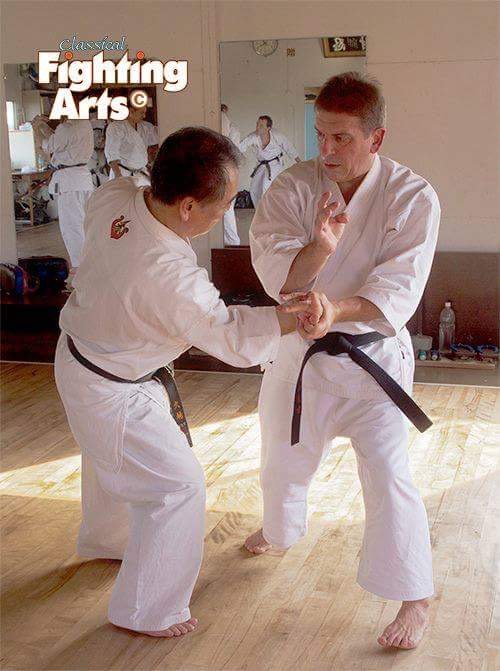
When students are ready, classes may include supervised partner drills. These exercises help students understand distance, timing, awareness, and the practical purpose of a technique. In a responsible dojo, partner work is controlled and matched to the student's level.
This is not about encouraging aggression. Students learn that karate demands restraint. They must pay attention to their partner, use the assigned level of contact, and stop immediately when instructed. For children and teens, that is a powerful lesson in self-control: having the ability to act does not mean acting without judgment.
Some classes also include self-defense applications, conditioning drills, or carefully structured sparring as students develop the necessary skill and maturity. The details depend on the program and the student's readiness. Good instruction does not rush students into activities before they can participate safely and respectfully.
Correction is part of encouragement
A beginner may worry about being corrected in front of others. In a healthy dojo, correction is not punishment. It is guidance. Instructors correct students because they see potential worth developing.
Students may be asked to try again, slow down, raise their guard, deepen a stance, or use more focus. The lesson is not that they failed. The lesson is that improvement is available through effort. This mindset can be especially valuable for young people who are used to giving up when something does not come easily.
Parents can reinforce this at home by asking, "What did you practice today?" rather than only asking whether a child earned a new belt or performed perfectly. Progress is measured in better habits, stronger attention, and the courage to keep working.
The closing gives training a purpose
Near the end of class, students may review what they learned, practice a final set of techniques, line up again, and close with a respectful bow. This closing matters because it gives students a chance to recognize their effort and leave the dojo with intention.
A good class does not end when the last kick is thrown. Students are encouraged to carry the lesson with them. Perhaps that means using better posture, speaking with more respect, completing a responsibility without being reminded, or choosing self-control in a frustrating moment. Karate training becomes meaningful when its principles travel beyond the mat.
At Ten Chi Jin Dojo, families can expect structure that is firm without being cold and encouraging without lowering the standard. The purpose is to build better people through authentic training, steady mentorship, and a community that wants each student to succeed.
The first class may ask a beginner to step outside a comfort zone. That is often where the journey begins. Come ready to listen, move, make mistakes, and try again. With each class, the routine that once felt unfamiliar can become a source of confidence, belonging, and personal direction.

Comments