

Is Okinawan Karate Effective for Real Life?
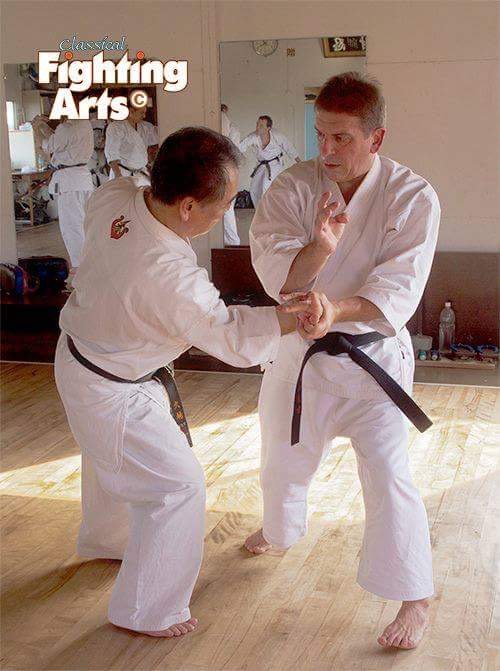
A lot of people ask this question after watching a class for the first time. The movements can look controlled, formal, and highly structured, so it is fair to wonder: is Okinawan karate effective when life gets difficult, stress is high, and real pressure shows up?
The honest answer is yes - but not for the shallow reasons people sometimes expect. Okinawan karate is effective because it develops the whole person. It teaches practical body mechanics, awareness, timing, discipline, and emotional control. It also asks for patience. If someone wants quick tricks without consistent practice, they may miss what makes traditional training so powerful in the first place.
Is Okinawan Karate Effective in Real Situations?
Effectiveness depends on what you mean by the word. If you mean, "Can it help a person protect themselves?" yes, it can. If you mean, "Can it improve fitness, confidence, posture, focus, and resilience?" yes, it can do that too. If you mean, "Will one month of classes make someone unstoppable?" no, and any honest school should say so.
Traditional Okinawan karate was not built as entertainment. It was developed as a disciplined method of personal protection and personal development. The techniques emphasize balance, stability, coordinated power, and efficient movement. Instead of relying only on size or athletic talent, students learn how structure, timing, distance, and repetition create reliable skill.
That matters in real life because most people do not rise to the occasion under stress. They fall back on what they have practiced. A student who has trained to stand with balance, strike with alignment, move with purpose, and stay mentally composed has a much stronger foundation than someone who has never trained at all.
Why Traditional Okinawan Karate Works
One reason Okinawan karate remains respected is that it trains fundamentals deeply. In a strong traditional program, students do not rush past basics. They repeat stances, strikes, blocks, body positioning, breathing, and footwork until those skills become natural.
To some outsiders, that can look repetitive. In reality, repetition is what makes a technique dependable. Good mechanics are not flashy, but they are effective. A properly trained punch, a stable stance, or a well-timed angle change can matter more than a long list of complicated moves.
There is also a mental side that should not be overlooked. Effective martial arts training is not just about hitting. It is about composure. Students learn how to manage frustration, stay respectful under pressure, and act with self-control. For children, that often shows up as better focus and confidence. For teens and adults, it often shows up as steadier decision-making and a stronger sense of responsibility.
Self-Defense, Fitness, and Character
People often separate these goals, but traditional karate tends to build them together.
For self-defense, Okinawan karate gives students awareness, distance management, striking fundamentals, and the discipline to respond instead of panic. That does not mean every situation should be handled physically. In fact, one mark of mature training is learning when not to engage. Avoidance, awareness, and restraint are part of real self-protection.
For fitness, karate improves coordination, mobility, strength, endurance, and posture. It asks the body to work as one unit. Many adults appreciate that this kind of training has purpose behind it. They are not just exercising to pass time. They are building control, stamina, and useful movement patterns.
For character, the benefits are often even deeper. Students are challenged to be consistent, respectful, humble, and accountable. Parents are often looking for exactly that kind of environment. They want their children to grow stronger without becoming arrogant, more confident without becoming careless, and more disciplined in a way that carries into school, home, and daily life.
Where People Get Confused About Effectiveness
Some confusion comes from comparing different goals as if they were the same. A combat sport, a cardio kickboxing class, and a traditional Okinawan karate dojo may all involve punches and kicks, but they are not always trying to produce the same outcome.
A sport setting may focus heavily on competition rules, timing, and scoring. A fitness class may focus on calorie burn and general conditioning. A traditional dojo is often trying to shape both martial ability and personal development over time. That broader purpose can make the training look slower at first, but it often creates deeper results.
Another source of confusion is poor instruction. Not every place that uses the word karate teaches with depth, lineage, or structure. Effectiveness depends greatly on the quality of the teacher, the consistency of the curriculum, and whether students are learning principles rather than only memorizing motions.
That is why authentic lineage matters. When a school is rooted in a respected Okinawan tradition, students are more likely to receive training that has been tested, preserved, and passed down with care. At Ten Chi Jin Dojo, that connection to traditional Okinawan karate is part of what gives training its seriousness and purpose.
Is Okinawan Karate Effective for Kids?
Yes, especially when the goal is long-term growth rather than short-term entertainment.
For children, effectiveness is not only about self-defense. It is about learning how to listen, follow direction, stay calm, and keep working when something feels difficult. Those are life skills. A child who learns to bow respectfully, stand with confidence, and persevere through challenges is gaining more than a new activity.
This is one of the great strengths of traditional karate in a family-centered setting. Kids need structure, but they also need encouragement. They need clear standards and patient mentorship. When both are present, karate becomes a place where children can grow in confidence without losing humility.
Of course, age matters. Young students are still developing coordination, attention, and emotional regulation. Their training should reflect that. The best youth programs do not force adult expectations onto children. They teach in a way that is age-appropriate while still protecting the values of discipline, respect, and effort.
Is Okinawan Karate Effective for Adults?
Absolutely, though adults often need to set realistic expectations.
An adult beginner may not move like someone who has trained since childhood. Flexibility, conditioning, and coordination may take time to build. That does not make the training less effective. In many cases, adults benefit greatly because they understand why the discipline matters.
Adults often come to karate looking for one thing - maybe fitness, stress relief, confidence, or self-defense - and end up discovering something more meaningful. They begin to carry themselves differently. They become more patient. They gain a stronger connection between mind and body. They learn that discipline is not punishment. It is a path toward freedom and control.
That said, traditional training does ask for commitment. Progress is earned. There is no shortcut around repetition, correction, and steady effort. For adults who are ready to take ownership of their growth, that challenge becomes part of the reward.
The Trade-Offs to Understand
If you want the clearest answer to the question "is Okinawan karate effective," here it is: yes, when taught well and practiced consistently, but its strengths come with trade-offs.
Traditional training is not built for instant gratification. It may feel slower than programs that promise quick results. It asks students to respect fundamentals, trust the process, and develop skill layer by layer. For some people, that is exactly what makes it valuable. For others, it can feel demanding.
There is also the reality that no martial art solves everything by itself. Awareness, judgment, physical conditioning, and consistent practice all matter. A style is only as effective as the training behind it and the character of the person using it.
That is why the best question may not be whether Okinawan karate works in theory. The better question is whether a student is willing to train in a way that allows it to work in practice.
What Makes It Worth Choosing
Okinawan karate remains effective because it develops useful skill and meaningful character at the same time. It teaches students how to move with purpose, respond with control, and grow through disciplined practice. That combination is rare.
For families, that means a child can learn confidence without losing respect. For teens, it means having a path that builds identity through effort and accountability. For adults, it means training that strengthens the body while also sharpening the mind and spirit.
If you are looking for a martial art that offers more than motion, more than noise, and more than short-term excitement, traditional Okinawan karate is worth serious consideration. The real value is not only in what it helps you do. It is in who it helps you become.

Comments