

The History of Okinawan Karate
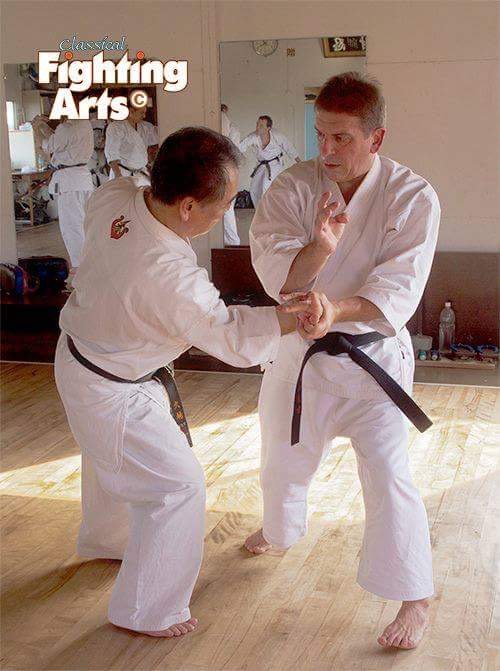
A child steps onto the dojo floor and learns how to bow, how to stand still, how to listen, and how to move with purpose. Those first lessons may seem simple, but they come from a tradition shaped over centuries. The history of Okinawan karate is not just a record of techniques. It is the story of a people who turned discipline, hardship, and cultural exchange into a path of personal development.
For families and students looking for more than recreation, that history matters. It explains why traditional karate places such strong emphasis on respect, repetition, self-control, and character. These values were not added later as a sales message. They were built into the art from the beginning.
The early roots of the history of Okinawan karate
Okinawan karate began on the Ryukyu Islands, especially Okinawa, long before it was organized into the modern dojo structure many people recognize today. Okinawa sat at a crossroads of trade between Japan, China, and other parts of Asia. Because of that, its people were exposed to different fighting methods, ideas, and cultural influences.
Before karate had its modern name, Okinawans practiced native methods of self-defense often referred to as te, meaning hand. These methods were practical and direct. They were shaped by local needs rather than sport. At the same time, Chinese martial arts influenced Okinawan fighters through trade, diplomacy, and travel. Over time, local methods and Chinese systems blended, creating something distinct.
This point matters because Okinawan karate was never a frozen art. It developed through contact, adaptation, and careful refinement. Traditional does not mean untouched. It means tested, preserved, and passed on with purpose.
Chinese influence and Okinawan identity
Any honest look at the history of Okinawan karate has to recognize the strong Chinese influence on its development. Okinawan officials and scholars traveled to China. Chinese families and visitors also settled in Okinawa. With them came martial practices that affected local training.
You can still see this influence in kata, breathing methods, close-range techniques, body conditioning, and the balance between hard and soft power. Some schools emphasize quick, linear striking. Others preserve circular motions, rooted stances, and controlled breathing. That variety is part of the art’s inheritance.
Still, Okinawan karate did not remain Chinese boxing under another name. Okinawan masters filtered what they learned through their own culture, needs, and teaching approach. The result was an art with a very strong sense of identity - practical, disciplined, and often deeply concerned with both physical skill and moral conduct.
Why weapon bans are part of the story
Many people hear that karate grew because weapons were banned in Okinawa, forcing people to defend themselves empty-handed. There is some truth in that, but the full story is more nuanced.
Political control and restrictions did affect how people thought about self-protection. Certain groups had limited access to weapons, and that likely encouraged the development of unarmed methods. But it would be too simple to say karate appeared overnight because swords were taken away. The art developed over generations through training, exchange, and personal instruction.
The same caution applies to Okinawan kobudo, the traditional weapon arts often connected with karate. Farming tools may have been adapted in some cases, but the history is not always as clean and dramatic as popular legends suggest. Real tradition usually has more depth than a short myth.
The three major centers of Okinawan karate
As karate developed, three regional centers became especially important: Shuri, Naha, and Tomari. Each area contributed to what would later become major styles and lineages.
Shuri-te, connected to the old royal capital, tended to emphasize quick movement, agile footwork, and striking methods. Tomari-te shared some of those traits while preserving its own local flavor. Naha-te often placed greater emphasis on rooted power, close-range application, body conditioning, and breath control.
These were not rigid categories in the way modern style names can sound. Teachers influenced one another, students cross-trained, and distinctions were sometimes fluid. Still, these regional traditions help explain why Okinawan karate includes such a wide range of methods. Some branches feel fast and light. Others feel grounded and heavy. Neither is automatically better. It depends on lineage, training goals, and how the principles are taught.
The masters who shaped modern karate
Karate was passed from teacher to student in small circles for much of its history. It was not originally a mass activity for children, families, or large public classes. That changed as key masters organized and shared their teachings more openly.
Sokon Matsumura is often recognized as a major figure in the development of Shuri-based traditions. Kanryo Higaonna played a central role in the Naha-te lineage after studying in China and bringing back methods that strongly influenced later generations. Anko Itosu helped move karate into the Okinawan school system, which was a turning point in its public growth. Chojun Miyagi, a student of Kanryo Higaonna, later formalized Goju-ryu, one of the most respected Okinawan systems.
When parents and adult students look for authentic training today, lineage matters because these teachers were not building entertainment programs. They were preserving methods of discipline and self-cultivation. The best modern dojos still honor that responsibility.
Karate enters the schools and the public eye
One of the biggest shifts in the history of Okinawan karate came when the art moved from private instruction into public education. This brought real benefits. Karate became more accessible, more organized, and easier to pass to the next generation.
It also changed the art.
When karate was taught in schools, some training methods had to be adjusted for group instruction and younger students. Dangerous applications were often toned down. Basics became more standardized. Kata became a central teaching tool, not only for combat principles but also for posture, focus, discipline, and coordination.
This is not a bad thing. In many ways, it is why karate remains such a strong path for youth development today. But it does mean that traditional karate always carries two responsibilities at once: preserving real martial principles while teaching in a way that builds people safely and steadily.
How Okinawan karate spread to Japan and beyond
In the early 20th century, karate moved from Okinawa to mainland Japan. As it spread, it continued to evolve. Names changed, training methods shifted, and Japanese budo culture shaped how karate was presented. Uniforms, ranking systems, and formalized dojo etiquette became more standardized.
This expansion helped karate reach the world, but it also created a difference between Okinawan karate and some later sport-focused or commercial versions. Okinawan systems generally kept a stronger link to kata application, body conditioning, close-range fighting, and character training as a lifelong practice. Japanese karate contributed structure and visibility, but some branches moved more toward competition and performance.
Again, it depends. Competition can build courage, timing, and discipline. It can also narrow training if it becomes the only goal. Traditional Okinawan karate usually asks for a broader purpose. The question is not just, Can you score a point? It is, Who are you becoming through training?
Why this history still matters in a modern dojo
For a student walking into class today, the history of Okinawan karate is not just background information. It shapes the entire training experience. The bow at the start of class reflects humility. The repetition of basics reflects patience. Kata preserves lessons from past generations. Partner drills teach control, not recklessness.
This is why authentic Okinawan training often feels different from programs built only around activity or entertainment. The goal is not simply to stay busy. The goal is to become more focused, more resilient, and more responsible.
At Ten Chi Jin Dojo, that traditional mindset matters because families are not only looking for punches and kicks. They are looking for guidance, structure, and a place where children, teens, and adults can grow stronger in body and character. The roots of Okinawan karate support exactly that kind of journey.
A tradition that keeps asking something of us
Karate has changed over the centuries, and it should be studied with honesty rather than fantasy. Some stories have been polished. Some methods have been adapted. Some lineages preserved more than others. But the heart of the art remains clear.
Okinawan karate teaches that skill without discipline is incomplete, and discipline without purpose is empty. That is why its history still speaks to modern families and serious students. It reminds us that training is not about looking impressive for a moment. It is about choosing steady improvement over time.
When you understand where karate came from, you begin to see what it is really asking from you now - respect the path, train with sincerity, and build a life that is stronger on and off the dojo floor.

Comments