
What Should Kids Wear to Karate Class?
The first karate class often starts with a simple parent question: what should kids wear to karate? It is a practical question, but it matters for more than appearance. The right clothing helps a child move freely, stay safe, and step onto the mat feeling prepared instead of self-conscious.
For many families, especially those new to martial arts, there is a worry about getting it wrong. The good news is that beginner expectations are usually simple. A child does not need elaborate gear to start. What they need most is clothing that allows focus, respect for the training space, and room to learn with confidence.
What should kids wear to karate on the first day?
For a first class, most kids can wear a plain T-shirt and comfortable athletic pants or shorts, as long as the dojo allows shorts. Clothing should be modest, easy to move in, and not so loose that it becomes distracting during drills. If your child has to tug at sleeves, adjust a waistband, or worry about slipping, that takes attention away from training.
A plain outfit is usually best. Bright decorations, dangling strings, sequins, and clothing with hard buttons or zippers can get in the way. Karate is built on discipline and awareness, so simple training clothes support the right mindset from the beginning.
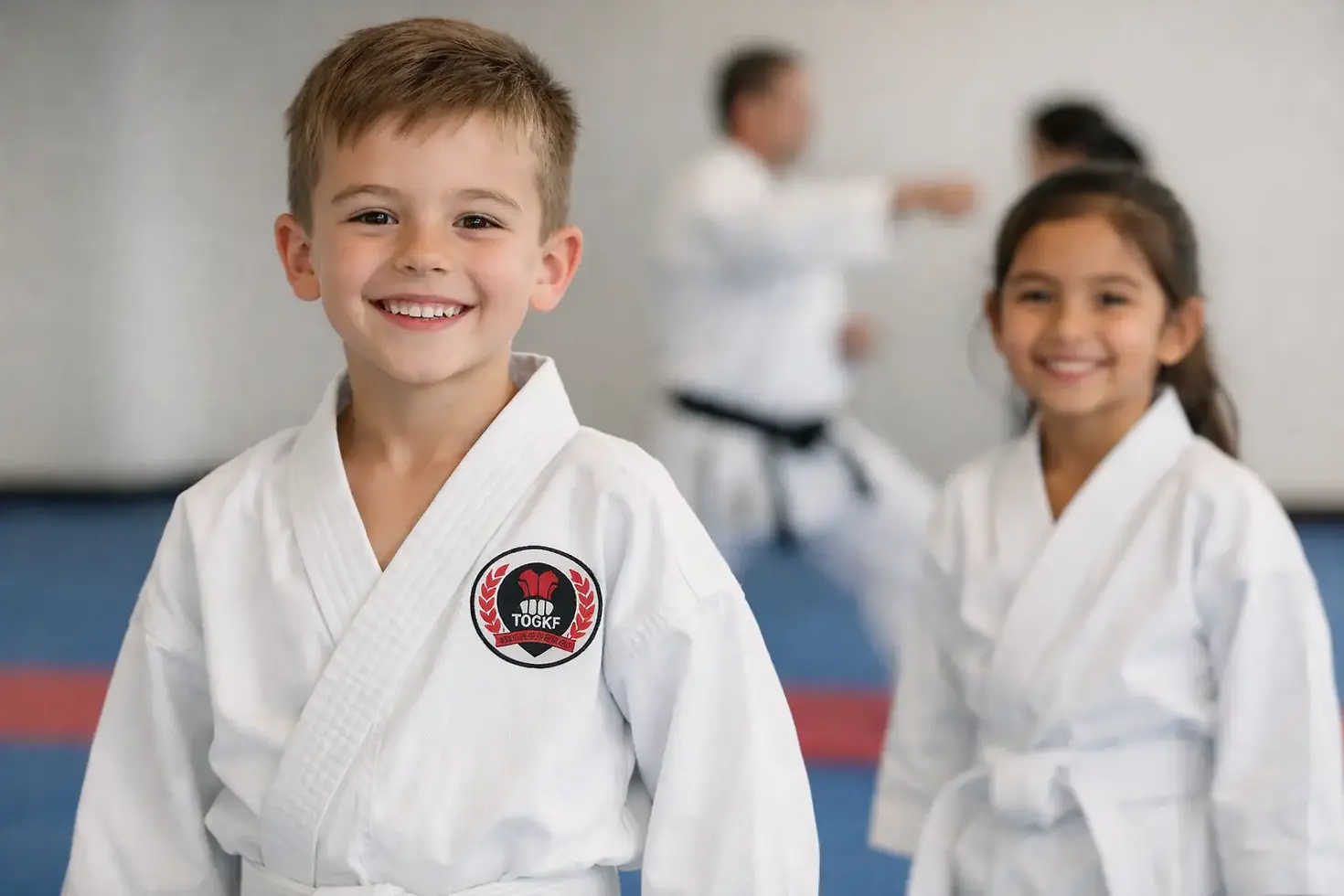
If your child has already received a uniform, then that is the best choice for class unless the instructor says otherwise. A karate uniform, often called a gi, is designed for movement, structure, and tradition. Wearing it helps children feel part of something meaningful. It also teaches them that training comes with standards, not just participation.
The basic karate outfit for kids
Once a child is enrolled, the standard answer to what should kids wear to karate becomes more straightforward. In most traditional programs, students wear a gi with the proper belt. The gi is not just a costume. It serves a purpose.
The jacket and pants are built to allow kicking, stances, kneeling, and partner practice. The fabric is durable enough for repeated training. Just as important, the uniform removes distractions. When everyone is dressed for the same purpose, the focus shifts from individual style to personal effort, respect, and progress.
In a traditional karate setting, the uniform also carries symbolic value. Children learn that when they put on the gi, they are stepping into a place of responsibility. They are preparing to listen well, control their bodies, and grow in character as well as skill.
That said, not every class has the same expectations on day one. Some schools invite beginners to try a class in athletic wear before providing a uniform. Others prefer students to transition to a gi quickly. It depends on the school, the age group, and how the program is structured.
What kids should not wear to karate
Knowing what to avoid is just as helpful as knowing what to choose. Clothes that are too tight can restrict movement during kicks and stances. Clothes that are too baggy can catch on hands or feet. Jeans are a poor choice because they limit mobility and can be uncomfortable on the floor.
Hoodies are another item to skip unless a specific program allows them. Hoods, thick fabric, and front pockets tend to create unnecessary bulk and distraction. Dresses, skirts, and outfits with accessories also make movement harder and can make a child feel awkward during class.
Jewelry should usually be removed before training. Necklaces, bracelets, watches, and large earrings can become safety concerns during movement and partner work. If a child wears something that cannot easily be removed, it is best to ask the instructor about the dojo policy ahead of time.
Shoes are another common question. Many karate classes are done barefoot. This helps with balance, traction, and awareness of the floor. Clean feet and trimmed toenails matter more than many new families expect, because they are part of training respectfully in a shared space.
Should kids wear shorts or pants to karate?
This is one of those situations where it depends on the dojo and the kind of class. On a trial day, athletic pants are often the safest choice because they provide coverage and move well. If the school allows shorts, they should be a proper athletic style and long enough to support modest movement.
Pants are often preferred because karate includes wide stances, kicks, kneeling, and floor-based movement. Some children also feel more comfortable and less exposed in lightweight training pants. Comfort can affect confidence, especially for younger students who are already adjusting to a new environment.
If your child is sensitive to fabric or heat, that is worth considering too. The best training clothes are the ones your child barely notices once class begins.
How the right clothing helps kids feel confident
Parents sometimes think clothing is a small detail compared to technique, but children experience it differently. A child who feels properly dressed is more likely to stand tall, participate fully, and stay mentally present. A child who feels awkward in their outfit may spend the whole class trying not to be noticed.
That is one reason structure matters. In traditional karate, the uniform creates a sense of belonging. Every student starts somewhere, and the gi becomes a reminder that growth comes through practice, patience, and humility. It tells a child, without saying a word, that they are here to learn.
For very young students, this can be especially helpful. Ritual and routine build security. Putting on the same training clothes, tying the belt carefully, and preparing for class in a respectful way teaches responsibility before instruction even begins.
What to bring along with karate clothes
Once you have answered what should kids wear to karate, it helps to think about a few other basics. A water bottle is usually a good idea, especially for active classes. Hair should be tied back securely if it is long enough to fall into the face. Some families also keep a small towel in the bag for comfort after training.
If your child is wearing a gi, make sure it is clean and neatly packed. A wrinkled uniform is not a crisis, but learning to care for training gear is part of the discipline of karate. This is one of the quiet ways martial arts helps children grow. They begin to understand that preparation is part of success.
A simple gym bag is enough. There is no need to overpack. When children carry only what they need, the routine stays calm and manageable.
Dressing for karate in different seasons
In North Georgia, weather can shift quickly, especially when families are moving between school, errands, and evening activities. For colder months, it is fine for a child to wear a jacket or sweatshirt to and from class. The training layer underneath should still be light enough for movement once class begins.
In warmer months, breathable fabric matters. Heavy cotton can feel hot if a child is in athletic wear for an intro class. Once a child is training in a gi, instructors may offer guidance on how to stay comfortable while still meeting dojo standards.
This is another place where balance matters. Kids should not be underdressed for the weather outside, but they also should not come into class wearing layers that make movement difficult or cause overheating.
A note for parents who want to get it right
If you are unsure what your child should wear, asking the dojo is always the best step. A good school will give clear expectations and make new families feel welcome. You do not need to already know the traditions to begin. You simply need the willingness to learn.
At a traditional school like Ten Chi Jin Dojo, clothing is part of a bigger lesson. Children are not just preparing for exercise. They are learning how to enter a disciplined space with respect, how to care for their equipment, and how to carry themselves with greater focus. The right outfit supports that journey from the very first class.
Choose simple, clean, movement-friendly clothing if your child is just starting. Move to a proper gi when the program calls for it. Keep the goal in mind: not looking impressive, but being ready to learn.
When a child walks into karate dressed appropriately, they are doing more than following a rule. They are taking the first step toward self-control, confidence, and the kind of growth that reaches far beyond the mat.

Comments