

A Guide to Okinawan Goju Ryu Basics
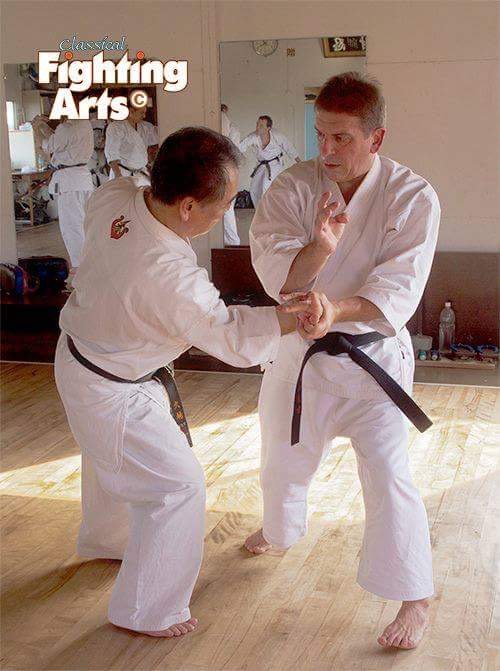
If you have ever watched a Goju-Ryu class and wondered why one moment looks soft and circular, and the next looks rooted and powerful, you are seeing the heart of the art. This guide to Okinawan Goju Ryu basics is meant to help beginners and families understand what they are really stepping into - not just a workout, but a disciplined path of growth.
Goju-Ryu comes from Okinawa, and its name points directly to its method: go means hard, ju means soft. That balance shapes everything from striking and blocking to breathing and mindset. A student learns that tension without relaxation becomes stiff, while softness without structure becomes weak. Training teaches how to blend both with control.
What makes Okinawan Goju-Ryu different
Many people begin karate thinking mainly about punches and kicks. In traditional Okinawan Goju-Ryu, those skills matter, but they sit inside a larger system. Posture, breathing, body alignment, close-range power, conditioning, and character are all part of the foundation.
This matters for parents and adult beginners alike. A strong program is not only teaching a child how to move. It is teaching how to listen, how to stay calm under pressure, and how to respond with discipline instead of emotion. For teens and adults, the same structure builds focus, humility, and resilience over time.
Goju-Ryu also tends to feel practical and grounded. Movements are often compact rather than flashy. Stances are designed to create stability. Techniques develop from the center of the body instead of relying only on arm strength. That can make the art especially rewarding for students who want substance, not performance.
A guide to Okinawan Goju Ryu basics starts with stance and posture
Before a beginner learns advanced combinations, they learn how to stand. That may sound simple, but it is where real karate begins. In Goju-Ryu, stance is not just about where the feet go. It is about connection to the floor, balance through the hips, and a spine that stays aligned so the body can move as one unit.
A new student will often work on basic stances like sanchin dachi, or Sanchin stance, and zenkutsu dachi, or front stance. Sanchin dachi is especially important in Goju-Ryu because it teaches rootedness, inward connection, and controlled body engagement. It can feel awkward at first. That is normal. The goal is not to look dramatic. The goal is to build a body that can support technique with integrity.
Posture follows closely behind stance. If the shoulders rise, the chest collapses, or the weight shifts carelessly, power leaks out. Good instruction helps students correct these habits early. Over time, better posture affects more than class performance. It often carries into daily life through improved confidence, better body awareness, and steadier presence.
Breathing is not extra - it is central
One of the clearest markers of Goju-Ryu is breathing training. In some martial arts schools, breathing is barely mentioned. In Okinawan Goju-Ryu, it is part of the method.
Breathing teaches timing, focus, and control. It also helps students understand when to relax and when to apply force. A classic example is Sanchin kata, where breath, posture, tension, and intent are trained together. This kind of work is not glamorous, but it is deeply valuable.
For beginners, breathing can be one of the hardest basics to trust because it feels subtle. Children may need time to understand it. Adults often try too hard and create tension in the wrong places. A patient instructor helps students learn that proper breathing supports technique rather than fighting against it.
There is an important trade-off here. Strong breathing work builds structure and concentration, but if it is forced too early, students can become rigid. That is why traditional instruction matters. The basics should challenge the student without taking away natural movement.
The core techniques: simple does not mean easy
At the beginner level, Goju-Ryu basics usually include foundational strikes, blocks, and kicks. Straight punches, rising blocks, circular receiving motions, front kicks, and knee strikes may all appear early in training. These techniques are repeated often.
Repetition is where many people either commit or quit. To an outside observer, basic punching and blocking can look repetitive. To a serious student, repetition is where details become skill. Hand position, elbow path, hip engagement, foot pressure, breath timing, and eye focus all change the result.
This is especially useful for children and teens. Repetition teaches patience and attention. It shows that progress does not come from constant novelty. It comes from doing small things correctly, again and again, until the body can express them with confidence.
Adults benefit in a different way. Basic technique often reveals habits that everyday life has built into the body, like tight shoulders, poor balance, shallow breathing, or overreaching. Training starts to correct those habits. In that sense, fundamentals are not a beginner phase to rush through. They are the work.
Kata and why it matters in Okinawan Goju-Ryu
If you are looking for a guide to Okinawan Goju Ryu basics, you cannot skip kata. Kata is a formal sequence of movements that preserves the principles of the style. In Goju-Ryu, kata is not just performance. It is a training tool that develops coordination, rhythm, breathing, focus, and application.
Beginners are often introduced to kata in stages. At first, the challenge is memory. Then comes timing. After that comes understanding. A student begins to see that each turn, chamber, strike, and stance has purpose.
This is where traditional karate can become deeply meaningful. Kata teaches that the basics are alive. A block is not only a block. A stance is not only a stance. The form carries lessons about distance, stability, direction, and response under pressure.
Some students love kata immediately. Others connect more slowly, especially if they expected nonstop sparring. That is okay. Goju-Ryu asks for maturity. Over time, many students discover that kata sharpens the mind just as much as it trains the body.
Conditioning, control, and partner work
Okinawan Goju-Ryu basics also include body conditioning and controlled partner training. This does not mean beginners are thrown into intensity without preparation. In a healthy dojo, development is progressive. Students build capacity step by step.
Conditioning may include stance work, core engagement, impact preparation, and drills that strengthen the body for practical movement. Partner work introduces timing, distance, and awareness of another person. These lessons are essential because solo practice and real interaction are not the same.
For younger students, this kind of training builds respect and self-control. They learn how to work with a partner safely and responsibly. For adults, it often exposes the gap between knowing a movement and applying it under pressure. That gap is not failure. It is part of the learning process.
A good school creates challenge without chaos. Students should feel supported, corrected, and steadily developed rather than pushed to impress anyone.
Mindset is one of the most important basics
The most overlooked beginner skill in karate is mindset. Students often think basics are physical: where to place the feet, how to form the fist, how to turn the hips. Those matter. But without the right attitude, progress stays shallow.
Goju-Ryu asks for humility. A beginner must be willing to be corrected. It asks for consistency. Improvement comes from showing up and doing the work, even when progress feels slow. It asks for self-control. Power without discipline is not the goal.
This is one reason families are drawn to traditional karate. The benefits carry beyond class. Children learn to accept instruction. Teens learn to direct their energy with purpose. Adults reconnect with patience and personal responsibility. At Ten Chi Jin Dojo, that kind of training is part of building better people, not just better technique.
How beginners should approach training
The best way to begin is with openness and consistency. Do not worry about looking advanced. Focus on posture, breathing, listening, and effort. Ask questions when needed, but also give the process time to work.
It helps to remember that different students progress in different ways. Some develop coordination quickly but need help with focus. Others understand structure well but take longer to move fluidly. Children, teens, and adults all bring different strengths and different challenges. Good instruction respects that without lowering the standard.
If you are a parent, look for a dojo that teaches discipline with warmth. If you are an adult beginner, choose a school that values tradition and personal development, not just intensity. The right environment should help you feel both challenged and supported.
The basics of Okinawan Goju-Ryu are not small things to get past. They are the path itself, and every strong student returns to them again and again with deeper understanding. Start there, stay faithful to the process, and let the training shape more than your technique.

Comments