
Okinawan Karate Builds Strength That Lasts
A child stands quietly before class, trying to remember a stance. A teen arrives carrying the pressure of school and expectations. An adult walks in looking for a healthier routine that means more than another workout. Okinawan karate meets each student at that starting point, then asks them to take one steady step forward.
This is not training built around quick belts, empty praise, or flashy movements for their own sake. Traditional Okinawan karate is a disciplined path of learning how to control the body, focus the mind, respect others, and continue when something feels difficult. For families, it can become a place where children grow stronger in character while adults find a meaningful practice they can carry into daily life.
What Makes Okinawan Karate Different?
Okinawan karate developed on the island of Okinawa, where martial arts were shaped by practical self-protection, close study, and a deep respect for personal discipline. Its techniques may include strikes, blocks, kicks, movement, breathing, conditioning, and partner practice. Yet the physical material is only one part of the art.
A traditional dojo teaches that power without control is incomplete. Students learn to use technique with purpose, to pay attention to distance and timing, and to understand that the best response is often a calm, thoughtful one. This is why karate training can be valuable for a young child learning self-control, a teenager building resilience, or an adult seeking a renewed sense of direction.
The pace may feel different from activities that focus mainly on speed, competition, or entertainment. Progress in Okinawan karate is built through repetition. A stance is practiced again because the body needs time to understand it. A form is repeated because each detail reveals something new as the student matures. That process teaches a lesson that reaches far beyond the training floor: meaningful growth is earned through consistent effort.
Okinawan Karate Is a Practice of Character
Parents often begin looking for karate because they want their child to be more confident. Confidence matters, but true confidence is not loudness or the need to prove something. It grows when a student learns, through experience, that they can listen, work, improve, and recover after mistakes.
In a well-structured class, students are expected to show respect from the moment they enter. They learn to follow directions, wait their turn, care for their training partners, and give their best effort even when no one is watching. These habits create structure, but they also create belonging. A child who knows what is expected can begin to trust themselves within that structure.
For teens, this kind of environment can be especially meaningful. Adolescence brings new pressures, distractions, and questions about identity. Karate offers a clear standard: show up, train with humility, treat people well, and keep working. A teen does not need to be the strongest person in the room to succeed. They need the willingness to keep learning.
Adults benefit from the same foundation. Training can improve coordination, mobility, balance, and conditioning, but it also creates protected time to be present. Instead of carrying the day’s stress from one obligation to the next, an adult student has a place to breathe, move with intention, and practice discipline alongside others who are on their own journeys.
The Value of Traditional Lineage
Not every program called karate teaches the same art or holds the same priorities. For a family choosing a dojo, lineage can be a helpful sign that the instruction is connected to an established tradition rather than assembled around trends.
Ten Chi Jin Dojo teaches within the lineage of Morio Higaonna’s Traditional Okinawan Goju-Ryu Karate-do Federation, rooted in Naha, Okinawa. That connection matters because it places training within a living body of knowledge, with standards for technique, etiquette, progression, and the responsibility of teaching.
Lineage alone does not make a class meaningful. The everyday culture of the dojo matters just as much. Students need instruction that is clear, patient, and appropriately challenging. They need teachers who correct with care and hold them accountable without tearing them down. Traditional karate at its best preserves both: respect for the art and respect for the person learning it.
What Students Actually Learn in Class
A beginner does not need to arrive fit, flexible, coordinated, or experienced. Those qualities can develop over time. The first job is simply to begin with an open mind and a willingness to learn.
Classes commonly build skills through basic movements, known as fundamentals, along with posture, footwork, strikes, blocks, and controlled kicking. Students also study kata, which are organized patterns of movement passed down through the tradition. Kata are not performances to memorize and forget. They train balance, awareness, breathing, concentration, and the ability to connect movements with purpose.
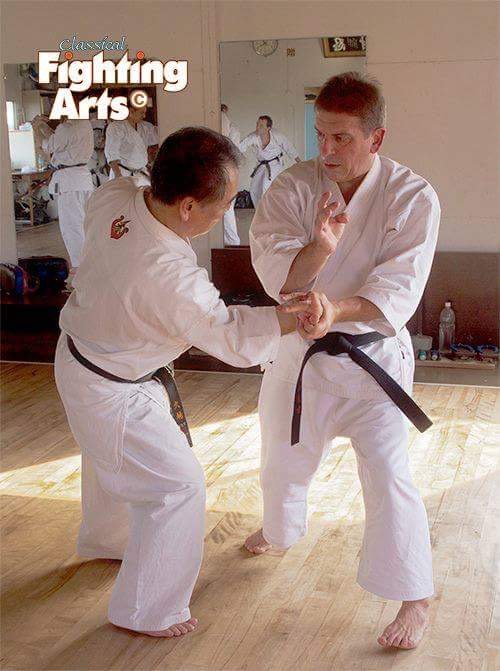
Partner work helps students understand timing, control, and responsibility. It should be taught carefully, with attention to safety and each student’s level of readiness. This is one reason a supportive dojo culture is so important. Students are not there to intimidate one another. They are there to help each other become more capable.
Training also includes challenges. A student may struggle with a new sequence, become frustrated when their balance is off, or need several weeks to understand a correction. Those moments are not signs that karate is failing them. They are part of what makes the practice valuable. Students learn that difficulty is something to meet with patience, not something to avoid.
Choosing the Right Karate Path for Your Family
The best program depends on the student’s needs and the family’s goals. A younger child may need help building focus, listening skills, and positive routines. A teen may need a healthy community and a place to develop self-respect. An adult may be looking for fitness, flexibility, practical skills, or a deeper personal challenge.
Before joining, pay attention to what happens in the room. Are students treated with dignity? Are expectations clear? Is discipline taught as guidance and responsibility, rather than fear? Does the instructor adapt instruction so beginners can learn safely while more experienced students continue to grow?
A family-centered dojo should also make room for individual differences. Some students gain confidence quickly. Others need time before they feel comfortable speaking up or leading a line. The goal is not to force every student into the same mold. The goal is to guide each person toward greater effort, stronger habits, and a clearer sense of purpose.
There are trade-offs to consider. Traditional karate asks for patience, and it may not satisfy someone looking only for instant results or constant novelty. But for students who are ready to practice with consistency, that slower, more intentional approach can create changes that last long after a single class ends.
A Stronger Way Forward
The value of Okinawan karate is not measured only by how high someone can kick or how many forms they can perform. It appears when a child chooses respect after a hard day, when a teen responds to pressure with self-control, and when an adult keeps a promise to their own health and growth.
A dojo can become a village of encouragement and accountability - a place where students are challenged, supported, and reminded that they are capable of more than they thought. Choose a path that develops skill with humility, strength with compassion, and discipline with purpose. Then give the journey the time it deserves.

Comments