
Martial Arts or Gymnastics for Your Child?
A child who is always climbing, cartwheeling, or testing the limits of the living room may seem like an obvious fit for gymnastics. A child who needs stronger focus, confidence, or self-control may seem better suited to karate. But the choice between martial arts or gymnastics is rarely that simple. Both can help children grow stronger, more coordinated, and more confident. The better question is: what kind of growth does your child need most right now?
For many families, the best activity is not the one that produces the most impressive skill the fastest. It is the one that gives a child a reason to keep showing up, working through challenges, and becoming more responsible at home, at school, and in their community.
Martial Arts or Gymnastics: What Each Builds
Gymnastics is an exceptional activity for body awareness. Students learn how to move with control, develop flexibility, build core strength, and understand balance. For children who love movement and enjoy practicing physical skills repeatedly, gymnastics can be deeply rewarding. It asks them to become precise with their bodies, whether they are learning a forward roll, a handstand, or a more advanced routine.
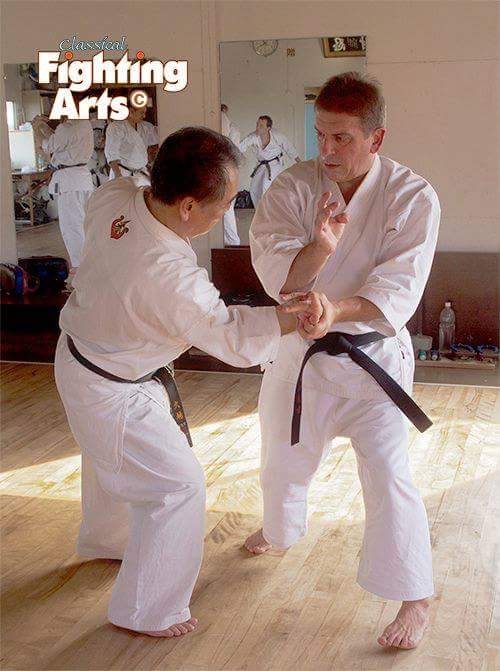
Martial arts also develops coordination, flexibility, strength, and balance, but it adds a different layer of training. In a traditional karate class, a student learns how to stand with attention, listen carefully, follow a sequence, control their energy, and treat training partners with respect. The physical lessons are connected to habits of character.
That difference matters to many parents. A child may become more athletic in either setting. In martial arts, however, the goal is often larger than athletic ability. Students are asked to practice patience when a technique feels difficult, humility when they make mistakes, and self-control when emotions run high. Those lessons can follow them far beyond the training floor.
Gymnastics emphasizes movement mastery
Gymnastics often centers on developing skill through progressive physical challenges. Children build confidence by seeing their bodies do things they could not do before. They learn timing, spatial awareness, flexibility, and courage. It can be especially appealing for children who are energized by tumbling, apparatus work, and measurable athletic milestones.
The environment can vary widely by program. Some children thrive in a recreational setting where they can explore movement and have fun. Others are motivated by the structure and performance goals of a competitive program. Families should consider whether their child enjoys that kind of athletic focus and whether the schedule fits their household well.
Martial arts emphasizes self-mastery
Traditional karate training gives children physical challenges, but it also gives those challenges a purpose. A student does not simply practice a stance until it looks better. They practice it with discipline. They do not only learn a punch or block. They learn when control matters and why respect is expected.
Progress through martial arts is usually built on steady practice rather than natural talent alone. A child who struggles with coordination can improve. A quiet child can find their voice. A highly energetic child can learn to direct that energy with greater awareness. Every student starts somewhere, and the training provides a path forward.
At Ten Chi Jin Dojo, traditional Okinawan karate is taught as a journey of physical, mental, and personal development. Students are encouraged to build skill, but also to become dependable people who can meet obstacles without giving up.
Which Environment Fits Your Child?
The right choice depends partly on your child’s interests, but parents should look beyond the first answer. A child may say they want gymnastics because they enjoy flips, yet benefit greatly from a martial arts setting that builds concentration and confidence. Another child may be drawn to karate because they want to feel strong, while discovering that the structured repetition feels reassuring rather than restrictive.
Think about how your child responds to instruction. Do they enjoy practicing the same movement until it improves? Are they motivated by performing skills? Do they need an outlet for big energy? Do they struggle to stay focused when an adult gives directions? These are not reasons to label a child. They are clues about the environment that may help them grow.
Martial arts can be especially meaningful for children who need a clear framework. Class routines, respectful communication, and attainable goals create consistency. Children learn that effort matters. They also learn that rules are not simply limits placed on them. Rules help create a safe place where everyone can learn.
Gymnastics may be an excellent choice for the child whose main joy comes from movement exploration and athletic expression. Martial arts may be the stronger fit for the child who needs that movement paired with guidance in responsibility, perseverance, and self-control. Neither path is inferior. They simply serve children in different ways.
The Confidence Question Parents Should Ask
Parents often want an activity that will build confidence. That is a worthy goal, but confidence is not created by praise alone. Lasting confidence comes when a child faces something difficult, practices consistently, and realizes, “I can do more than I thought I could.”
Gymnastics builds that feeling through physical accomplishment. A child may work for weeks to hold a handstand or complete a new tumbling skill. Karate builds it through physical accomplishment as well, but often through emotional growth at the same time. A student may earn confidence by speaking loudly during class, remembering a form, helping a newer student, or returning to training after a frustrating day.
This is why martial arts can be powerful for children who do not see themselves as naturally athletic. They do not have to be the fastest, strongest, or most flexible student to belong. They need the willingness to practice. Over time, that willingness becomes evidence of their own capability.
Consider the Benefits Beyond Class
An extracurricular activity should fit into family life, not add stress without purpose. Before enrolling, consider what you hope your child will carry into the rest of their week.
If your goal is primarily flexibility, coordination, and athletic movement, gymnastics may meet that need beautifully. If you also want your child to develop respectful habits, listening skills, personal accountability, and a healthier response to challenge, a traditional martial arts program may offer a broader framework.
The instructor’s approach matters as much as the activity itself. Look for a place where children are known by name, standards are clear, and encouragement does not mean lowering expectations. Healthy confidence grows when children feel supported enough to try and challenged enough to improve.
A strong martial arts community also gives families a shared language for growth. A parent can remind a child to show the same focus at homework that they show in class. A child can practice respect at home, not only when wearing a uniform. Training becomes part of how a family approaches goals, setbacks, and daily responsibilities.
You Do Not Have to Choose Based on Labels
Some children will enjoy both martial arts and gymnastics at different points in life. Others will try one and quickly know it is not their path. That is not failure. It is useful information.
Instead of asking which activity is best for every child, ask which setting will call your child forward. Observe how they feel after a class. Are they proud, engaged, and eager to return? Do they respond well to the instructor? Are they learning to work through discomfort in a safe, positive way?
Choose the program that helps your child become stronger in body and steadier in character. The right training environment will not only give them something to do after school. It will give them a place to practice becoming the person they are capable of becoming.

Comments