
What Makes Okinawan Karate Authentic Today?
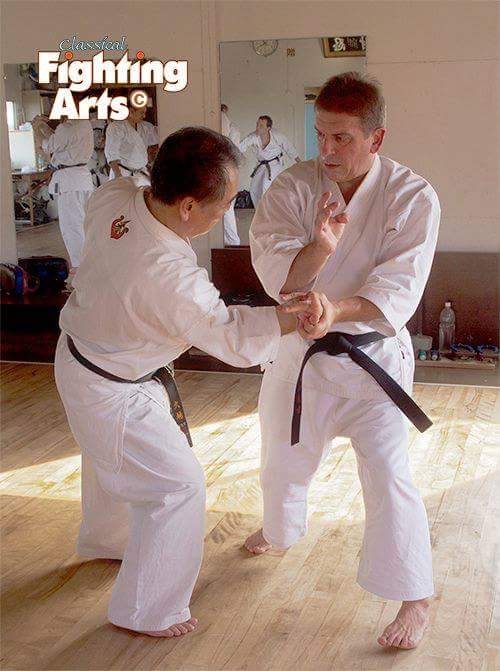
A black belt, a Japanese uniform, and a serious class atmosphere can all look traditional. But appearances alone do not answer the question, what makes Okinawan karate authentic? Authenticity is found in the source of the teaching, the purpose behind the training, and the way a dojo helps students carry discipline into daily life.
For families and adults seeking more than a workout, that difference matters. Okinawan karate was shaped to develop capable, steady, responsible people. Its training can strengthen the body, but its deeper work is learning to meet discomfort with composure, respect others, and take ownership of your choices.
What Makes Okinawan Karate Authentic?
Authentic Okinawan karate is not a frozen performance from the past. It is a living tradition passed from teacher to student, with clear roots, careful study, and an honest commitment to the values that gave the art its purpose.
A trustworthy school should be able to explain where its karate comes from, how its instructors learned it, and why students practice in a particular way. That does not mean every class looks exactly as it did generations ago. Children need age-appropriate instruction, and adult beginners need a safe path into challenging material. The standard is not imitation for its own sake. The standard is preserving the principles while teaching them responsibly.
Authenticity also asks more of a student than memorizing techniques. It calls for patience, consistent effort, humility, and a willingness to be corrected. Those qualities are not extras added after the punches and kicks. They are part of the training.
A Living Lineage, Not a Borrowed Label
Okinawan karate developed on Okinawa, where generations of teachers refined methods of striking, movement, breathing, body conditioning, and self-protection. A legitimate lineage connects modern students to that ongoing study rather than using Okinawan language simply as decoration.
At Ten Chi Jin Dojo, instruction is rooted in the lineage of Morio Higaonna and the Traditional Okinawan Goju-Ryu Karate-do Federation in Naha, Okinawa. That connection gives students a meaningful starting point: they are learning within a recognized stream of traditional Okinawan karate, not an invented collection of moves.
Lineage is not about claiming superiority over every other martial art. Many systems offer real value, and a skilled teacher can be found in more than one tradition. Lineage matters because it creates accountability. It gives instructors a body of knowledge to protect, questions to keep studying, and teachers beyond themselves to learn from.
For a parent, this can be reassuring. You do not need to become an expert in martial arts history before enrolling your child. You can simply ask thoughtful questions: Who taught the instructor? What organization supports the school? Is the curriculum connected to a continuing tradition? Clear, respectful answers are a good sign.
Kata Carries More Than Choreography
Kata is often one of the first things people notice in traditional karate. A student performs a set sequence of stances, blocks, strikes, turns, and movements. From the outside, it may look like a solo routine. In authentic Okinawan karate, kata is a training text.
Each form teaches posture, balance, coordination, timing, breathing, and the ability to generate power without unnecessary tension. Over time, it also asks students to study applications within the movements. A turn may teach positioning. A chambered hand may represent control, defense, or preparation for a follow-up action. A low stance may develop stability when pressure is applied.
Kata should not become empty choreography performed only for a test. Students need repetition, because repetition builds skill. Yet repetition without attention can become mechanical. Good instruction helps students understand why details matter, then gives them time to develop those details through practice.
This is especially valuable for young students. Learning a kata teaches them to listen, remember sequences, correct mistakes, and finish what they begin. For teens and adults, it can become a demanding form of self-study. The form does not change to flatter the student. The student grows by meeting the form with greater care.
Practical Training With Control and Responsibility
Traditional does not mean impractical. Okinawan karate was created for close-range self-protection, with emphasis on strong fundamentals, efficient movement, and the ability to remain composed under pressure. Authentic training includes applications, partner work, conditioning, and the disciplined practice needed to make technique useful.
At the same time, practical training must be taught with judgment. A beginner does not need to be overwhelmed. A child does not need adult-level intensity. Effective instruction builds skill in layers: stance and body awareness first, then coordination, timing, partner drills, and increasingly refined application.
Control is one of the clearest signs of real martial arts training. Students learn that strength without restraint is not maturity. They practice respect for training partners, follow safety expectations, and understand that conflict avoidance is wiser than proving a point. Karate should make a person harder to intimidate, but also less likely to create unnecessary conflict.
Physical conditioning belongs here as well. Traditional training develops legs, hips, core stability, mobility, posture, and endurance. The goal is not simply to leave exhausted. The goal is to build a body that can move well, recover, and support a disciplined life. Progress looks different for a seven-year-old, a busy parent, and an adult returning to exercise after years away. The work should be challenging, but it should also be sustainable.
Character Is Part of the Curriculum
The deepest test of karate is often what happens away from the dojo floor. Does a child speak more respectfully at home? Does a teen learn to reset after frustration instead of quitting? Does an adult become more consistent, patient, and accountable?
Authentic Okinawan karate treats character as part of the curriculum because technique without character can be misused. Respect is practiced in how students enter class, listen to instruction, work with partners, and receive correction. Perseverance is practiced when a stance burns, a kata feels difficult, or a student has to repeat a basic movement one more time.
This does not mean karate students are expected to be perfect. Everyone has hard days. A supportive dojo does not shame people for struggling. It gives them structure, encouragement, and clear standards so they can choose a better response. That combination of warmth and accountability is especially powerful for families.
Parents often come looking for confidence, focus, and discipline. Those results are possible, but they are built through participation. Confidence grows when a child faces a challenge and learns, through experience, that effort changes what they can do. Focus grows when the student practices returning attention to the task. Discipline grows when commitments are kept even when motivation fades.
A Dojo Should Feel Like a Place of Belonging
A traditional dojo has standards, but it should not feel cold or isolating. Students learn best when they know they belong and understand that their growth matters. The strongest martial arts communities create a village-style environment where younger students have positive examples, adults train with purpose, and families encourage one another.
This is not the same as making every class easy or treating rank as a participation prize. Healthy belonging includes expectations. Students are expected to show respect, practice sincerely, and contribute to the learning environment. In return, they receive guidance from instructors and support from a community that wants them to succeed.
When visiting a dojo, watch how instructors speak to students who make mistakes. Notice whether advanced students help beginners with patience. Pay attention to whether the school talks only about trophies and belts, or whether it also speaks about responsibility, health, confidence, and service to others. Culture reveals what a school truly values.
Tradition Must Keep Being Earned
No school becomes authentic merely by placing “Okinawan” on a sign. Authenticity is maintained through continued study, honest teaching, disciplined practice, and respect for the people who trust the dojo with their growth.
For students, this creates a meaningful path. You do not need special athletic ability to begin. You need the willingness to show up, listen, and practice. Over time, the movements become stronger, the mind becomes steadier, and the lessons begin to reach beyond class.
Choose a school that honors where karate comes from while helping you become who you are capable of being. The best traditional training does not ask you to live in the past. It prepares you to meet your life with courage, self-control, and purpose.

Comments